
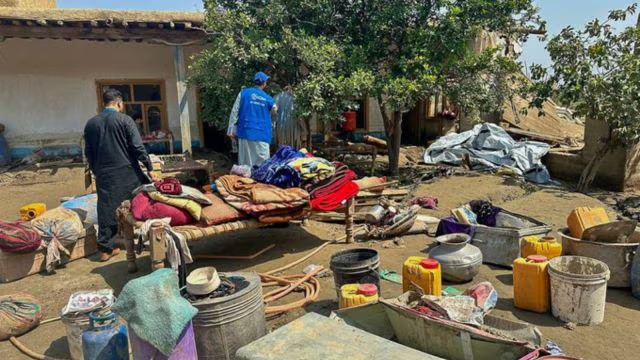
Jalalabad, Afghanistan: A devastating earthquake measuring 6.3 in magnitude struck eastern Afghanistan late Sunday night, killing at least 800 people and leaving more than 1,300 injured, officials confirmed. Several villages were completely razed, and thousands of homes collapsed as rescuers rushed to affected areas.
According to the United States Geological Survey (USGS), the quake struck at 11:47 pm, about 27 kilometers east-northeast of Jalalabad in Nangarhar province, at a shallow depth of just 8 kilometers, making it especially destructive. The agency also warned of potential aftershocks in the coming days.
Villages Wiped Out, Rescue Efforts Underway
Interior ministry spokesman Abdul Matin Qani reported that the worst-hit areas were in Kunar province, where three villages were completely destroyed. “Rescue operations are still underway there, and several villages have been completely destroyed. Medical teams from Kunar, Nangarhar, and the capital Kabul have arrived in the area,” said Sharafat Zaman, a spokesman for the Ministry of Public Health.
Unverified videos circulating online showed bodies being carried by villagers, widespread destruction, and emergency responders working amid rubble. Many homes made of mud and stone crumbled instantly under the powerful tremors.
Population at Risk
The USGS estimated that about 271,900 people lived in the area most affected by the earthquake. Many survivors have been left homeless and are awaiting aid, while rescuers continue to search through debris for those trapped.
Reuters reported that in some regions, the tremors were felt as deep as 10 kilometers, devastating rural communities near the border with Pakistan’s Khyber Pakhtunkhwa province.
No Foreign Assistance Yet
Despite the scale of destruction, Afghanistan’s foreign office said no foreign governments have yet intervened with rescue or relief assistance. The Taliban administration is coordinating with local teams, but resources remain scarce.
Afghanistan’s Earthquake Tragedies
Afghanistan is highly prone to earthquakes due to its tectonic position. Just last year, a magnitude 6.3 earthquake in October 2023 killed at least 4,000 people. Earlier, in February 2022, another quake left over 1,000 people dead in different parts of the country.
This latest disaster adds to Afghanistan’s long list of tragedies, leaving communities already struggling with poverty and instability to grapple with another humanitarian crisis.
