
Dhaka, March 21, 2025:
In a significant political development, Bangladesh’s interim government announced that it has no plans to ban the Awami League, the political party of ousted former Prime Minister Sheikh Hasina, despite mounting pressure from student-led revolutionary groups who played a central role in the 2024 uprising that removed her from power.
The announcement, made through an official government statement late Thursday, directly responds to public calls for a complete political ban on the party, which has been accused of systemic human rights abuses during its 15-year rule.
Caretaker Government Led by Nobel Laureate Stands Firm
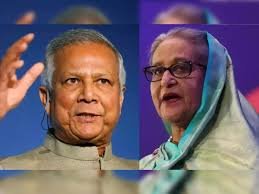
Nobel Peace Prize winner Muhammad Yunus, the de facto head of the caretaker administration that assumed office after Hasina’s ouster, clarified that while the government will pursue justice against individuals accused of serious crimes, it will not dissolve or outlaw the Awami League itself.
“Professor Yunus stated that the interim government has no plans to ban the party,” read the official statement.
“However, individuals within its leadership who are accused of crimes—including murder and crimes against humanity—will be tried in Bangladesh’s courts.”
This approach signals a commitment to legal due process rather than blanket political purging, even amid widespread demands for harsh measures.
Background: A Violent Uprising and Ongoing Tensions
Sheikh Hasina, Bangladesh’s longest-serving Prime Minister, was forcibly removed from power in 2024 after months of student-led protests turned into a full-blown revolution.
- The protest movement, sparked by allegations of election fraud, corruption, and authoritarianism, saw violent clashes with government forces.
- Over 800 protesters were reportedly killed during a brutal crackdown, intensifying anger and galvanizing support for regime change.
- Hasina eventually fled to neighboring India, where she remains in political exile.
The Awami League, founded by Hasina’s father and central to Bangladesh’s 1971 war for independence, has since become a symbol of both national pride and authoritarian excess, creating divided public sentiment around its legacy.
Student Leaders Demand Total Ban on Awami League
While the interim government calls for legal proceedings, student leaders remain adamant that the Awami League should be disbanded entirely due to its alleged involvement in:
- Mass surveillance
- Arbitrary arrests of dissenters
- State-sponsored violence
- Election rigging and media suppression
Many protestors view the party’s continued existence as an insult to the memory of those who lost their lives during the 2024 uprising.
Arrest Warrants and Legal Action Underway
Authorities in Dhaka have already issued arrest warrants against Sheikh Hasina and several of her top allies. These include charges related to:
- Crimes against humanity
- Mass murder
- Suppression of peaceful protestors
The government confirmed that these cases will be pursued through national tribunals and judicial systems, emphasizing transparency and adherence to the rule of law.
A Divisive Path Forward
The caretaker government’s decision reflects a delicate balancing act—trying to heal a fractured nation without descending into vindictive political retaliation.
While some hail the move as a mature step toward democratic stability, others argue that allowing the Awami League to operate politically undermines the revolution’s spirit and offers a route back to authoritarianism.
As Bangladesh navigates this fragile post-revolution period, all eyes remain on how the interim leadership will manage justice, accountability, and reconciliation.
