
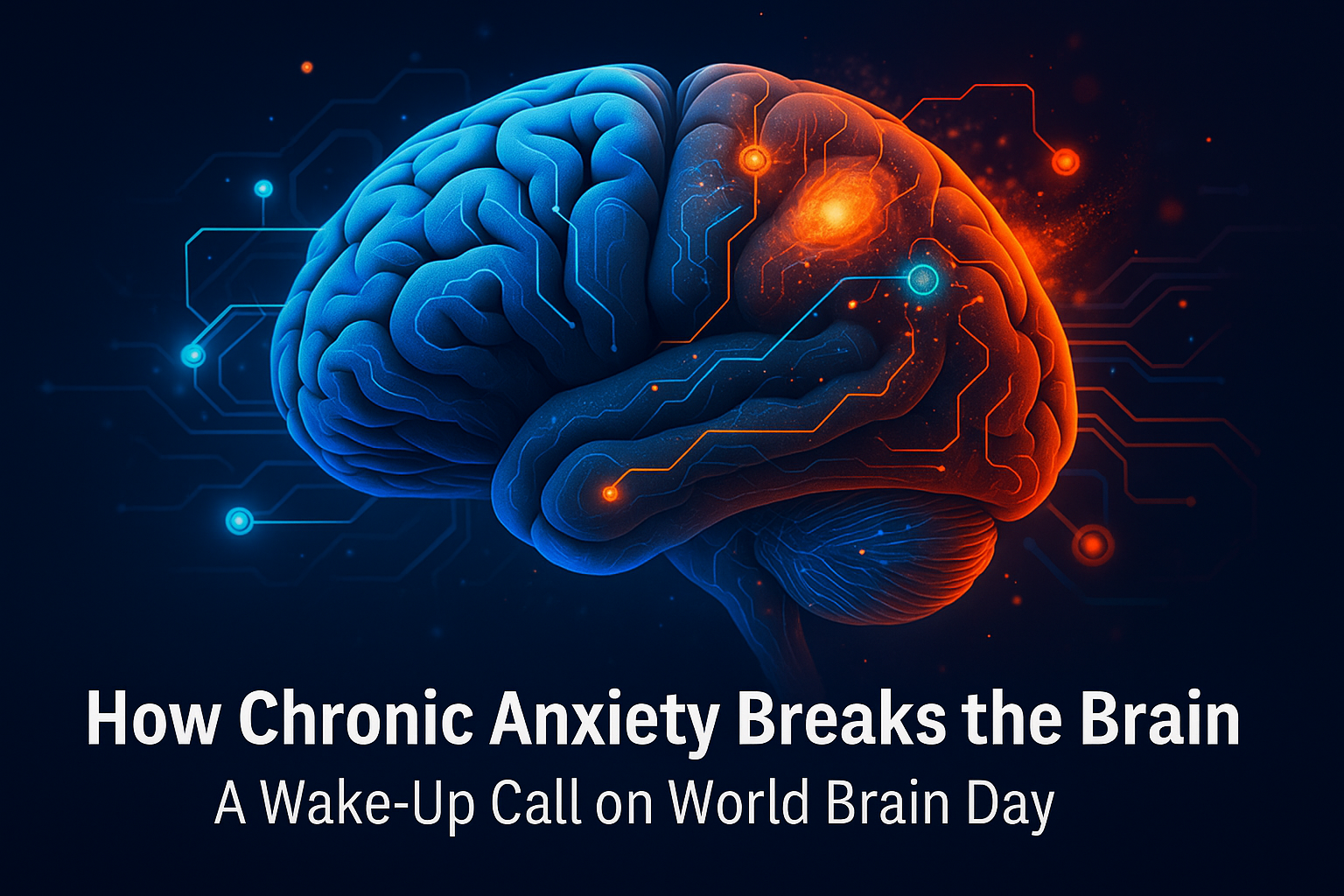
Chronic anxiety may shrink the brain and spark neurodegeneration. Learn how anxiety, inflammation, and poor sleep threaten long-term brain health.
We often see anxiety as a mental strain—sleepless nights, whirlwind thoughts, sweaty palms. But on this World Brain Day, the conversation is shifting: Could chronic anxiety be silently eroding your brain—and hurting you in the long run?
Emerging research suggests yes, long-term anxiety doesn’t just affect your mind; it can damage it. It shrinks memory centres, triggers inflammation, disrupts sleep, and could set the stage for diseases like Alzheimer’s and Parkinson’s.
Here’s how anxiety quietly becomes a brain breaker—and what you can do about it.
1. Cortisol’s Kick: Anxiety Eats at Your Hippocampus
Anxiety grips the HPA axis, your body’s stress-control hub. Instead of activating briefly, it stays switched on, flooding you with cortisol.
Dr. Prajwal Rao, Neurology Head at D.Y. Patil Medical College, Pune, warns:
“Sustained cortisol exposure has neurotoxic effects. It weakens the hippocampus, the area of the brain responsible for memory and learning.”
Studies confirm this: people with generalised anxiety disorder often show reduced hippocampal volume—a change also seen in early Alzheimer’s.
2. Inflammation: Your Brain’s Self-Sabotage
Chronic anxiety ignites neuroinflammation—the brain’s immune cells (microglia) go into attack mode. Over time, this chronic state can damage neurons and compromise the blood-brain barrier.
Inflammation isn’t just uncomfortable—it’s a major red flag in Parkinson’s, ALS, and Alzheimer’s Health and Me.
🌙 3. Sleep Misses — The Nighttime Cleaning Crew Fails
Deep sleep is when your brain’s glymphatic system works overtime, flushing toxins like beta-amyloid, the protein linked to Alzheimer’s.
But anxiety cuts deep sleep short. Without those restorative hours, toxic proteins build up, and your brain starts losing its defenses PMCFrontiers.
Studies show just one sleepless night increases harmful beta-amyloid in memory-critical regions like the hippocampus .
4. Genetics + Anxiety = A Dangerous Combo
Some brains are doubly at risk—wired for anxiety and genetically vulnerable to stress damage. For them, chronic anxiety isn’t just an emotional drain; it may accelerate cognitive decline.
Screening older adults and those with a family history of dementia could be lifesaving.
5. Anxiety in Older Adults: Too Often Ignored
Restlessness, poor sleep, irritability—these are often chalked up to “just ageing.” But Dr. Rao says it could be much worse:
“Anxiety in the elderly shouldn’t be dismissed—it may be a modifiable risk factor for neurodegeneration.”
Treating anxiety early in seniors isn’t just about mood—it’s brain protection.
What You Can Do to Defend Your Brain
| Strategy | Why It Helps |
|---|---|
| CBT & Mindfulness | Lowers cortisol & reprograms stress response |
| Regular Exercise | Reduces microglial inflammation; boosts hippocampal function |
| Deep Sleep Hygiene | Keeps your glymphatic system working at night |
| Anti-inflammatory Diet | Supports long-term brain immunity and detox pathways |
Final Word
On World Brain Day, remember: Anxiety isn’t just emotional—it’s biological.
You’re not only preserving peace of mind—it’s about protecting your brain’s wiring, memory hubs, and resilience against aging.
So next time worry grips you—pause and think: am I saving my mind, or breaking it?
FAQs
1. Does treating anxiety really protect the brain?
Yes—therapy, exercise, and sleep hygiene reduce cortisol, protect the hippocampus, and reduce inflammation.
2. Can poor sleep alone raise Alzheimer’s risk?
Definitely—sleep loss hampers glymphatic detox, letting amyloid build up
Absolutely. Anxiety in older adults deserves attention—not dismissal—as it may protect against cognitive decline.
4. Are there biomarkers for anxiety-driven brain damage?
Researchers are exploring cortisol levels, inflammatory markers, and MRI hippocampal volume loss.
5. Can lifestyle change reverse damage?
Yes. With consistent sleep, stress therapy, exercise, and diet, you can halt and often reverse early changes.
Please don’t forget to leave a review.
This article was originally written by Shimonto Chowdhury in Medium: https://medium.com/@shimantachowdhury9/world-brain-day-how-chronic-anxiety-rivets-the-brain-and-could-spark-neurodegeneration-887a00e54228
