
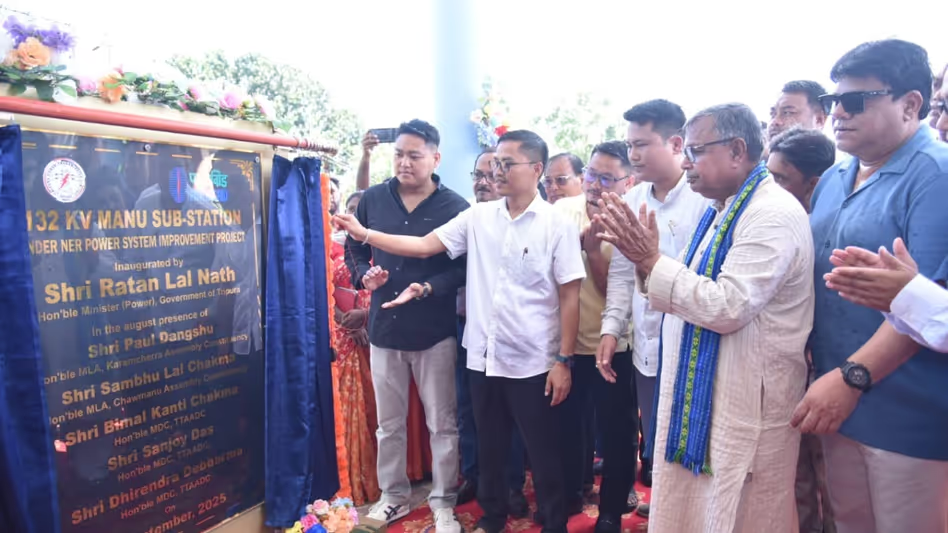
In an effort to boost renewable energy sources and reduce dependence on gas-based power, Tripura is making significant strides towards expanding its solar power capacity. The state government has announced plans to generate 150 megawatts (MW) of solar power within the next two years, with a focus on installing solar panels in 50,000 households and bringing 10 lakh consumers under solar coverage. Additionally, all government offices in Tripura will be shifted to solar energy.
Power Minister Ratan Lal Nath emphasized the importance of this initiative, stating that the state’s reliance on gas-based power has become unsustainable. He highlighted Prime Minister Modi’s emphasis on the importance of solar energy for sustainable living. Tripura’s solar generation has seen a significant increase from 3 MW before 2018 to 29 MW currently, marking a turning point in the state’s energy strategy.
Nath also highlighted the rapid growth in power infrastructure in Tripura over the past seven years. The number of 132 kV substations has increased from 12 to 20, with two more under construction. The 132 kV line network has almost doubled from 485 km to 986 km, while 33 kV substations have risen from 44 to 75. Underground cabling has also expanded from 95 km to 571 km.
With the consumer base in Tripura growing from 7.21 lakh in 2018 to 10.38 lakh currently, Nath stressed the importance of informing the Tripura State Electricity Corporation Limited (TSECL) when adding high-consumption appliances to ensure transformer capacity can be upgraded. He noted that while the rising demand for power reflects the state’s development, it also puts pressure on the power grid.
The work to shift all government offices in Tripura to solar energy is set to commence in the next two months. Nath reiterated the essential role of power in daily life and emphasized the need for development to benefit all citizens, regardless of political affiliations. The government’s ambitious plans for expanding solar power in Tripura signal a significant step towards a cleaner and more sustainable energy future for the state.
