
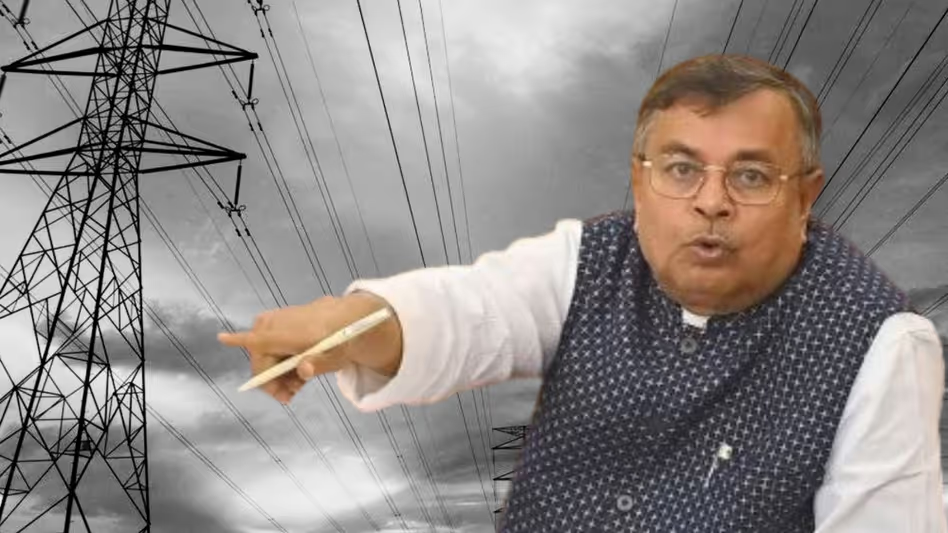
Tripura is exploring the possibility of exporting electricity to Nepal, a move that could potentially solidify the state’s position as a key regional energy supplier. Power Minister Ratan Lal Nath made the announcement on October 17, highlighting the state’s commitment to modernisation and sustainable energy growth.
The proposal to export electricity to Nepal will ultimately require approval from the Central Government. Nath shared this development while inaugurating the 132 KV Gokulnagar Sub-Station in Sepahijala district, which was constructed as part of the North Eastern Region Power System Improvement Project at a cost of Rs 43.98 crore. This new sub-station is expected to ensure a steady and high-quality supply of electricity to local consumers.
Nath emphasized that Tripura heavily relies on natural gas for power generation, but with reserves depleting, the state needs to find alternative solutions to meet the increasing demand for electricity. Over the past seven years, the number of power consumers in Tripura has risen from 7.21 lakh to 10.38 lakh, indicating the need for a more reliable power supply.
The state is currently facing challenges with dwindling gas supply, as evidenced by the significant drop in output at the Rokhia power project from 63 MW to just 19 MW. To address this issue, Tripura is investing Rs 935 crore in upgrading the facility with combined cycle gas turbine (CCGT) technology, which will enhance efficiency without escalating gas consumption.
In addition to these efforts, Tripura is moving forward with plans for an 800 MW pumped storage project at Chawmanu, with a Detailed Project Report currently in the works. Furthermore, a 400 KV sub-station is scheduled to be constructed at Suryamani Nagar to bolster transmission capacity and reinforce Tripura’s stature as a power hub in the region.
Nath also revealed that a meeting regarding the proposal to export electricity to Nepal is taking place in Delhi, with the Central Government set to make the final decision. He further disclosed that all government offices in Tripura will soon be outfitted with rooftop solar power systems as part of the state’s broader push toward clean and sustainable energy sources.
With these initiatives, Tripura is poised to not only meet its own energy needs but also potentially become a significant player in the regional energy market, supplying power to neighbouring countries like Bangladesh and potentially Nepal in the near future.
