
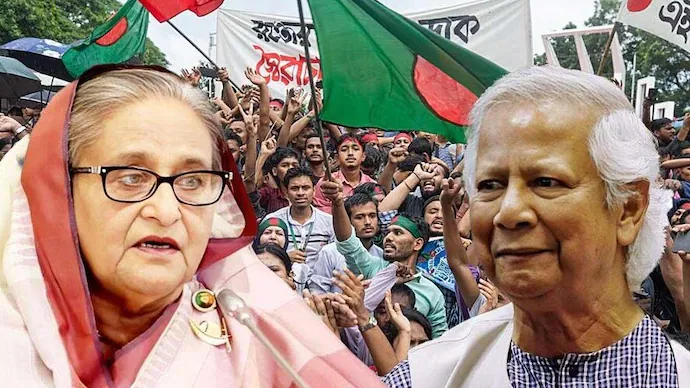
Bangladesh’s interim administration, led by Muhammad Yunus, is taking steps to seek the assistance of Interpol in extraditing ousted Prime Minister Sheikh Hasina and former Home Minister Asaduzzaman Khan Kamal from India. This decision comes after the International Crimes Tribunal in Dhaka handed down death sentences to the two individuals for crimes against humanity.
Following the ICT verdict, Sheikh Hasina claimed that the trial was orchestrated by the Yunus-led interim administration in an attempt to target her politically and undermine the Awami League. Reports from various Bangladeshi media outlets suggest that the interim administration is now planning to request Interpol’s help to bring Hasina back to Bangladesh.
The prosecutor for the ICT has announced plans to seek Interpol’s assistance, following a statement from Dhaka’s foreign ministry indicating that they will be writing to New Delhi for the same purpose. Sheikh Hasina and Asaduzzaman Khan Kamal were both sentenced to death in absentia for their involvement in crimes against humanity during the 2024 July-August unrest in Bangladesh.
After the student protests in 2024 were taken over by Islamist groups, Sheikh Hasina was forced from power and fled to India, where she is believed to be currently residing in New Delhi. Asaduzzaman Khan Kamal, who also fled to India, has refused to disclose his location but is reported to be in self-imposed exile.
The ICT prosecutor has stated that preparations are underway to request an Interpol Red Notice for the two fugitives based on the conviction warrant issued by the Tribunal. The Yunus administration in Bangladesh has also indicated that they will be formally requesting India to extradite Sheikh Hasina and Kamal.
India, while not directly responding to Dhaka’s requests, has stated that they remain committed to the best interests of the people of Bangladesh and will engage constructively with all stakeholders. Dhaka’s foreign ministry is finalizing a note to be sent to India, following a previous request in December 2024 for Hasina’s extradition that went unanswered.
Although there is a 2013 extradition treaty between India and Bangladesh, which obligates both countries to hand over convicted fugitives, there are provisions for refusal in cases deemed political in nature. The future of Sheikh Hasina’s extradition remains uncertain, as experts believe her case falls into a legally grey and politically sensitive area.
Both Sheikh Hasina and Asaduzzaman Khan Kamal have denounced the verdict as politically motivated and lacking due process. Hasina’s Awami League condemned the judgment as biased and politically motivated, while Kamal alleged that the court was created to target Awami League leadership. As Bangladesh intensifies its efforts for extradition, India’s response will play a crucial role in determining the fate of Bangladesh’s former prime minister.
