
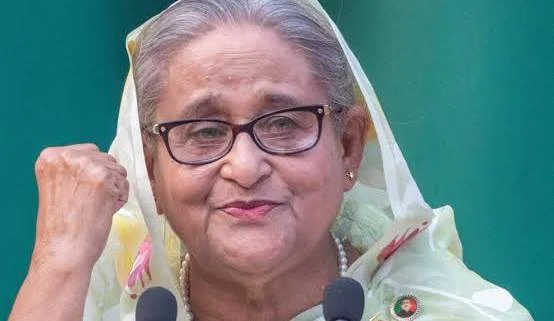
The recent court verdict sentencing Bangladesh’s former Prime Minister Sheikh Hasina to death on charges of crimes against humanity has sent shockwaves across political, diplomatic, and human rights circles. For some, this moment represents the end of a 15-year authoritarian era. For others, it signals legal and ethical uncertainties that could shape Bangladesh’s democracy for years to come.
The ruling — delivered in absentia — comes roughly a year after Hasina was ousted during the wide-scale uprising of 2024 that left hundreds dead and thousands injured. Since then, she has remained in exile in India, calling the verdict politically motivated and biased.
But what does this verdict truly mean for Bangladesh?
A New Transition: From Hasina to Yunus
Bangladesh is currently led by Nobel Peace Prize laureate Dr. Muhammad Yunus, who assumed power as the head of the interim government when Hasina’s administration collapsed in August 2024.
While his role is temporary, his responsibility is monumental:
🗳️ Prepare the country for a free, fair, and peaceful election in February — the first one in nearly two decades without either Sheikh Hasina or her rival, Khaleda Zia, in contention.
However, the political climate is deeply polarized.
Political analyst Michael Kugelman warns of potential risks:
“The interim government has suppressed the Awami League. Emotions are high, and the risk of violence remains serious.”
Supporters of the Awami League — Hasina’s party — believe the trial was flawed. They fear exclusion from politics could deepen national division rather than heal it.
Can There Be Healing Without Inclusion?
One of the biggest questions is whether democracy can be rebuilt by banning the very party — Awami League — that ruled for 15 years and still commands strong grassroots influence across Bangladesh.
Hasina’s son has issued a warning from abroad:
If the ban on political activity remains, Awami League supporters may obstruct the February elections.
The government insists that banning key political actors is necessary to prevent authoritarian comeback. But many analysts argue:
🔹 True national reconciliation requires their participation — not exclusion.
Will India Extradite Hasina?
Bangladesh has requested India to extradite Sheikh Hasina. But according to experts, it is unlikely.
India has long had a strategic relationship with Hasina — particularly on security and regional diplomacy. Most believe New Delhi will allow her to remain safely in exile.
Kugelman notes:
“In South Asia, dynastic leaders rarely disappear permanently. They wait, regroup, and often return.”
Think of Benazir Bhutto, Nawaz Sharif, Chandrika Kumaratunga — history in this region is full of political comebacks.
Human Rights Concerns — Was the Trial Fair?
Major human rights organizations, including Human Rights Watch and Amnesty International, have raised concerns:
🚨 Trial conducted without the accused present
🚨 Allegations of political pressure on judiciary
🚨 Use of death penalty, which the UN opposes
Even the UN Human Rights Office expressed mixed reactions — recognizing the emotional closure for victims of the 2024 crackdown, but firmly opposing the death penalty.
The Real Test: Dr. Yunus’s Leadership
Dr. Yunus is known globally for microfinance and poverty alleviation.
But now, his challenge is political — not social.
As former BBC Bengali Service Editor Sabir Mustafa says:
“Yunus needs to ensure that the upcoming election is free from intimidation, political revenge, or power manipulation — else his own legacy will be at stake.”
To succeed, Yunus must:
🔹 Maintain law and order peacefully
🔹 Ensure ALL parties get a fair chance to campaign
🔹 Prevent the election from being hijacked by any single political force
🔹 Convince the world that Bangladesh is ready to return to democracy — not revenge
What’s Next?
✔ Sheikh Hasina will not be extradited soon
✔ Awami League might survive — but needs internal reform
✔ Elections will face tension, but global attention will ensure some accountability
✔ Bangladesh stands at a critical turning point — between democratic rebirth and deepened political rift
🇧🇩 Final Thought
Bangladesh today doesn’t just face a legal crisis.
It faces a moral and constitutional reckoning.
Is justice about punishment — or restoration?
Is democracy about exclusion — or inclusion?
And more importantly — Who decides?
Bangladesh’s future may depend less on one court decision, and more on whether the country can build a political system that survives beyond individuals.
