

New Delhi, November 22:
A fresh political debate has emerged over the role of Aadhaar as a valid identity document in India’s electoral process, following recent observations linking Aadhaar authentication to a rise in voter record corrections across certain regions.
Initially, the Election Commission of India (ECI) did not accept Aadhaar as a valid identity document for voter registration, citing privacy and constitutional concerns. This decision was challenged by opposition groups, who approached the Supreme Court arguing that Aadhaar should be considered a legitimate form of identity proof.
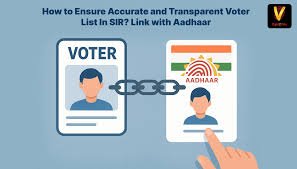
The Supreme Court later ruled that Aadhaar could be used as a valid identity document under specific legal safeguards. The ECI subsequently amended its stance and began linking Aadhaar numbers with EPIC voter identity cards to strengthen identity verification and reduce duplicate or invalid entries.
Officials say that Aadhaar-EPIC linking has helped detect inconsistencies in electoral rolls, including multiple registrations and incomplete documentation. This has reportedly led to corrections and voluntary deletions in some states, though no official data has confirmed any specific demographic trends.
Political analysts argue that had Aadhaar been accepted as a valid document from the beginning, the resistance to Aadhaar–voter card linking might have been even stronger, especially from opposition parties that fear potential misuse of digital data.
Some experts suggest that Aadhaar-based biometric authentication during polling could further enhance transparency, though others warn of privacy, infrastructure, and digital exclusion challenges.
Constitutional expert Prof. R. Sinha said,
“Aadhaar can help improve electoral integrity, but it cannot replace democratic trust. Unless there is full transparency in data usage and consent, skepticism will remain.”
While some sections hail Aadhaar-linked electoral records as a step toward cleaner elections, critics caution against over-reliance on digital databases without robust data protection laws.
The Election Commission has not yet announced any plans to introduce biometric authentication during voting, but sources indicate that pilot testing and feasibility studies may be underway.
