
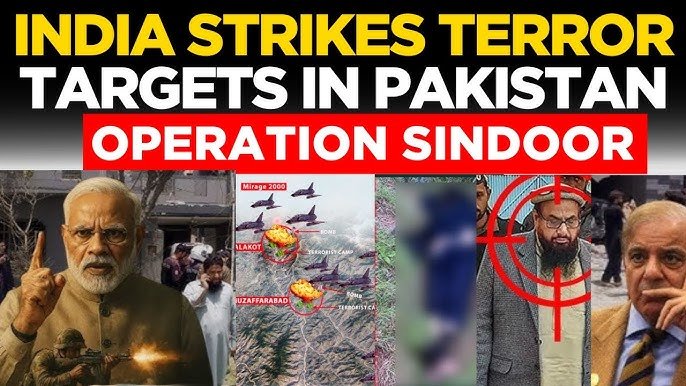
Indian Prime Minister Narendra Modi personally oversaw ‘Operation Sindoor’ as India launched a massive strike on nine terror targets in Pakistan and Pakistan-Occupied Kashmir in response to the Pahalgam terrorist attack that claimed the lives of 26 innocent people.
The strike, which took place exactly two weeks after the April 22 attack, saw the destruction of the terror headquarters of Jaish-e-Mohammad in Bahawalpur and Lashkar-e-Taiba in Muridke. This operation was deemed more impactful than previous surgical strikes by India, as it targeted not just terror camps but the actual headquarters of these globally proscribed organizations.
Sources revealed that special precision munitions were used in the operation, which involved coordination between the Army, Air Force, and Navy. The strike was meticulously planned over the last fortnight in order to ensure maximum impact.
The operation also aimed to send a strong message to Pakistan about India’s determination to eradicate Pakistan-sponsored terrorism. Sources dismissed claims by Pakistan that innocent civilians had been targeted, stating that the strike was focused solely on terrorist infrastructure.
Locations targeted in the strike included Muzaffarabad, Kotli, Muridke, Bahawalpur, Sarjil, Gulpur, and one location near Sialkot. Pakistan was reportedly caught off guard by the timing and precision of the strike, as it had anticipated a mock drill by India on Wednesday.
Despite a busy day of meetings and public engagements, Prime Minister Modi managed to keep the operation under wraps until its execution. Last week, he had given the service chiefs of the Army, Air Force, and Navy the authority to plan and execute the response as they saw fit.
The successful strike once again showcased India’s ability to surprise and outmaneuver Pakistan in the ongoing conflict over cross-border terrorism. The operation, led by Prime Minister Modi, demonstrated India’s resolve to combat terrorism and protect its citizens from future threats.
