
New Delhi, Nov. 22:
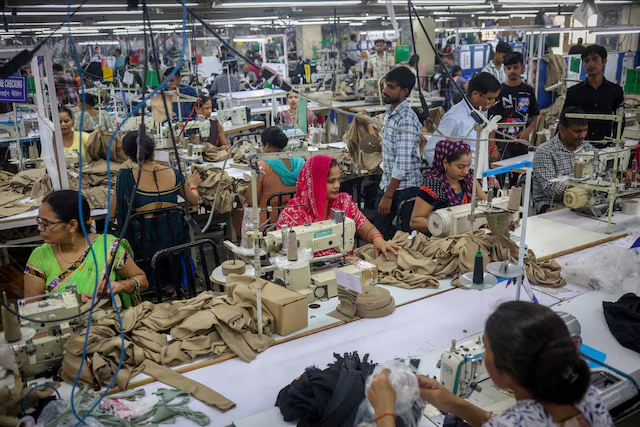
In a landmark overhaul of India’s decades-old labour regulations, the Central Government has officially implemented four new labour codes—covering Wages, Industrial Relations, Social Security, and Occupational Safety—to be enforced uniformly across the country. These reforms aim to modernize India’s labour ecosystem, affecting employees, gig workers, women professionals, and businesses alike.
🔹 Easier Hiring and Firing Policies for Employers
Under the new Industrial Relations Code, companies with up to 299 employees can now lay off or retrench workers without prior government approval, raising the threshold from the previous limit of 100.
This move is intended to promote employment flexibility, ease of doing business, and boost small and medium-sized enterprises (SMEs).
🔹 What Changes for Workers?
For the first time, formal written employment letters will be mandatory for all employees.
The new codes ensure:
• Social security benefits for gig workers, platform workers, and temporary workforce
• Minimum wage floor to reduce regional wage disparity
• Annual free health check-up provisions
• Mandatory compliance on safety and working conditions across industries
🔹 Business-Friendly Provisions
The new regulations bring major clarity and operational flexibility for employers:
• Daily work hours can range from 8 to 12 hours, while weekly limit remains 48 hours
• Double wages for overtime
• Contractors can now obtain a single five-year license valid throughout India—reducing paperwork and boosting mobility
🔹 Empowering Women in the Workforce
The codes also aim to make workplaces more inclusive for women:
• Equal pay for equal work
• Permission for women to work night shifts, with mandatory safety provisions
• 26 weeks of maternity leave extended to even women in unorganized sectors and informal jobs
🔹 Gig and Platform Workers Recognized for the First Time
In a historic move, the codes formally define gig and platform workers, extending elements of social security, insurance, pension, and welfare benefits to food delivery agents, app-based drivers, freelancers, and digital platform workers.
Outlook
While employers welcome the flexibility and simplified compliance framework, labour unions have raised concerns about potential misuse and job insecurity. Experts believe the new codes will reshape India’s labour markets, balancing economic growth, worker protection, and inclusive employment.
