
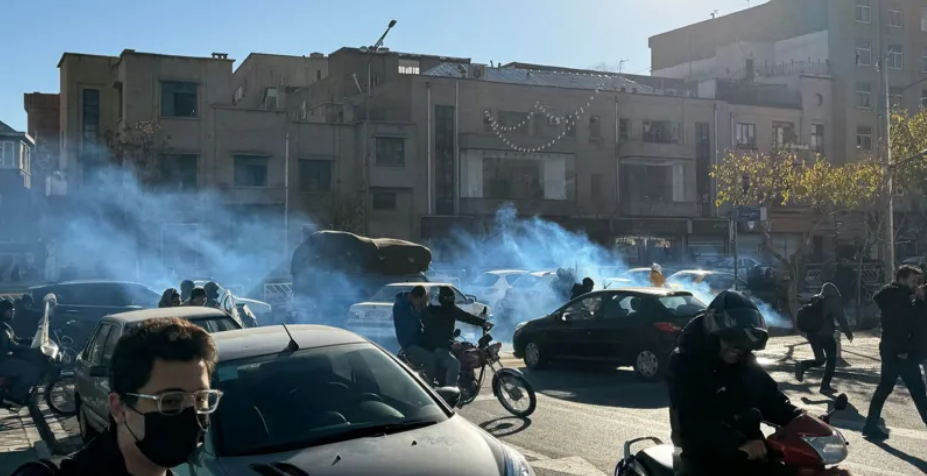
Iran is sliding into one of the most turbulent phases of its recent history. What began as anger over a collapsing currency has now escalated into nationwide unrest, openly challenging the authority of Iran’s clerical establishment.
Across Tehran, Isfahan, Lorestan and several other provinces, streets have filled with protesters chanting slogans that go far beyond economic grievances. Calls of “Death to the dictatorship” and “Mullahs must leave” directly target Supreme Leader Ali Khamenei, signalling a political rupture rather than a temporary protest wave.
At the heart of the crisis lies a brutal economic collapse. The Iranian rial has plunged to historic lows, touching around 1.4 million to the US dollar, wiping out savings and pushing basic necessities out of reach for millions. Sanctions, mismanagement, corruption and years of isolation have hollowed out the economy, leaving little room for short-term relief.
Universities are paralysed, bazaars shuttered, and security forces stretched thin. Videos circulating online show growing coordination among protesters, despite internet restrictions and mass arrests. Unlike earlier cycles of unrest, the current movement appears more defiant, less fearful, and increasingly unified across class and region.
The regime’s options are narrowing. Heavy-handed crackdowns risk fuelling further anger, while concessions could embolden demands for systemic change. Internationally, Tehran faces isolation, limited allies, and an economy already on life support.
Iran is not just witnessing protests—it is confronting a legitimacy crisis. Whether this chaos hardens into sustained revolt or is suppressed by force will shape not only Iran’s future, but the balance of power across the Middle East.
