
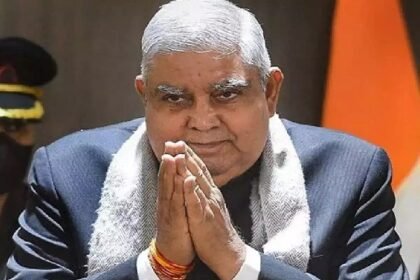
Explore the political signals, backstage whispers, and quiet pressure that led to Vice President Jagdeep Dhankhar’s abrupt resignation. The full timeline, decoded.
When Vice President Jagdeep Dhankhar handed in his resignation on July 21, 2025, it sent a ripple through India’s political waters. The official reason was health-related, but anyone following the fine print of Indian politics knows that such exits rarely come without layers of hidden context, gentle nudges, and strategic silence.
So what led to the sudden exit of India’s 14th Vice President? Let’s trace the trail.
Step 1: Health Issues Begin to Surface
In March 2025, Dhankhar was admitted to AIIMS for cardiac-related treatment. Though the Prime Minister’s Office downplayed the severity, insiders revealed it was his second episode in under 10 months. A fainting incident in June during a public function in Uttarakhand only added fuel to the speculation fire.
➡️ Public Story: “He needs rest.”
➡️ Political Whisper: “A soft exit plan is already in motion.”
Step 2: Parliamentary Rifts and Tensions
Though Dhankhar presided over the Rajya Sabha with sharp discipline, his increasing friction with opposition members, frequent disruptions, and vocal criticism of judicial overreach often polarised the House.
He had also recently faced criticism for allegedly “overstepping” his constitutional role, especially during discussions on judicial accountability.
➡️ Visible Strain: Frequent walkouts, opposition pushback.
➡️ Backdoor Signal: Reduce exposure or face a formal no-confidence motion.
Step 3: The Judiciary–Legislature Conflict
Dhankhar had been notably vocal about the basic structure doctrine and judicial overreach—a stance that created discomfort among senior judges and legal thinkers. His rhetoric became fodder for Parliament debates, and some even whispered that it had drawn the displeasure of top judicial figures.
➡️ Political Balancing Act: Remove Dhankhar to defuse tension.
Step 4: The Monsoon Surprise
On the opening day of the Monsoon Session, Dhankhar attended the morning session, presided over key business, and then—just hours later—submitted his resignation.
The timing was so surgical, many MPs assumed it was a calculated message: avoid conflict, avoid drama, and exit quietly under the pretext of health.
➡️ Translation: Timing was strategic, not coincidental.
Step 5: The Nitish Kumar Buzz
Barely a day after Dhankhar’s resignation, speculation exploded about Nitish Kumar being tapped as the next Vice President. Nitish’s shifting alliances, diminishing relevance in Bihar, and strategic value at the Centre suddenly fit the puzzle perfectly.
➡️ Theory: Dhankhar’s exit may have been choreographed to make room for a more politically useful VP heading into the 2029 elections.
🧩 Step 6: Opposition’s Strategic Silence… Then Questioning
Most opposition parties remained quiet immediately after the resignation, but not for long. Leaders like Jairam Ramesh raised eyebrows, saying the move “seemed too sudden to be only about health.”
➡️ Interpretation: The opposition didn’t want to criticise prematurely, but they weren’t buying the health narrative either.
📌 In Summary: The Real Story Behind the Exit
| Event | Hidden Implication |
|---|---|
| March health scare | Flag for early retirement |
| June fainting incident | Trigger for quiet exit planning |
| Rajya Sabha friction | Succession is already in motion |
| Judicial comments | Crossed a line for many |
| Sudden resignation | Coordinated and clean exit |
| Nitish Kumar buzz | Succession already in motion |
The Bigger Picture
In Indian politics, nothing is ever truly abrupt.
Jagdeep Dhankhar’s resignation wasn’t just a health decision. It was a carefully layered outcome of political fatigue, strategic exits, and succession math.
In the coming weeks, as the Vice Presidential race heats up, we’ll know whether his exit was just the end of a tenure or the beginning of a larger political shift at the Centre.
FAQs
1. Did Dhankhar resign purely due to health reasons?
Not entirely. Health may have been a factor, but political pressure and strategic realignment played equal, if not bigger, roles.
2. Who will likely replace him?
Nitish Kumar is a strong contender, with multiple BJP voices already warming up to his candidacy.
3. Was this resignation expected?
Internally, yes. Publicly, it was crafted to feel sudden and dignified.
4. How will this affect the Monsoon Session?
The Rajya Sabha may see a temporary slowdown until a new Vice President is elected.
5. Could this signal a shift in Modi govt’s 2029 plans?
Absolutely. The right VP pick can help reset equations ahead of the next general elections.
Please don’t forget to leave a review.
