
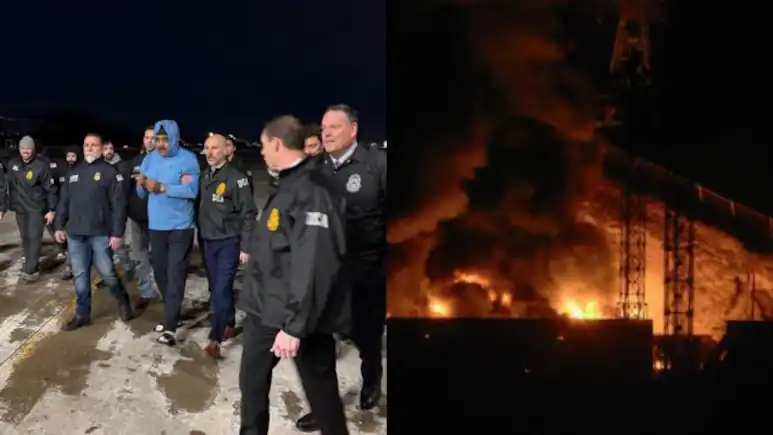
Venezuelan President Nicolás Maduro is currently being held at the Metropolitan Detention Center in New York after being captured during United States military strikes on Venezuela over the weekend, according to US officials.
Maduro and his wife, First Lady Cilia Flores, were taken from the Venezuelan capital Caracas and transferred to the US following the operation. He is expected to face drug trafficking–related charges in American courts. Maduro has repeatedly denied allegations that he led or supported a drug cartel.
Following the operation, Venezuela declared a state of national emergency, condemning what it described as “military aggression” by the United States of America. The Venezuelan government has accused Washington of violating international law and undermining the country’s sovereignty.
US President Donald Trump defended the operation, stating that the United States would effectively “run” Venezuela until a “safe, proper and judicious transition” of power could be achieved. Trump also said US oil companies would help repair Venezuela’s damaged infrastructure and revive its energy sector, arguing that such involvement would ultimately benefit the Venezuelan economy.
The remarks have drawn international attention, as they appear to mark a significant shift from Trump’s earlier pledge during his second term to avoid initiating new wars and instead focus on ending existing conflicts. Critics argue that the operation represents direct regime intervention, while supporters claim it was a necessary move against alleged narco-state activity.
As Venezuela enters an uncertain political phase, global reactions continue to pour in, with several countries closely watching the legal, diplomatic, and economic consequences of the unprecedented move against a sitting head of state.
