
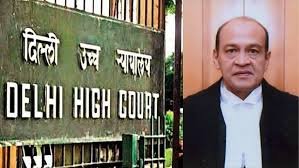
New Delhi (March 21, 2025):
In a stunning development that has raised serious questions about judicial accountability and transparency, a large amount of unaccounted cash was reportedly recovered from the residence of Justice Yashwant Verma, a sitting judge of the Delhi High Court, during firefighting efforts at his home.
As the news broke, the Supreme Court collegium, led by the Chief Justice of India (CJI), convened an emergency meeting and subsequently decided to transfer Justice Verma to the Allahabad High Court, triggering widespread outrage and speculation.
Fire Leads to Shocking Cash Discovery
The incident came to light when a fire broke out at Justice Verma’s Delhi residence. During the firefighting operation, authorities allegedly discovered a significant stash of cash stored within the house.
- The exact amount has not yet been confirmed by officials.
- The source and legality of the funds remain under question.
- No official investigation by central agencies has been announced as of now.
This incident has sparked massive public and political outcry, with many questioning whether judges are being held to different standards than ordinary citizens.
SC Collegium Responds with Quiet Transfer
Rather than initiating an independent probe into the origins of the recovered cash, the Supreme Court collegium’s response was to transfer Justice Yashwant Verma to the Allahabad High Court—a move being widely criticized as a mere administrative shuffle.
Legal observers and critics are calling the decision insufficient, suggesting that the judiciary is shielding its own instead of allowing law enforcement agencies to act.
“If such a large cache of cash had been discovered in the home of a politician, bureaucrat, or businessperson, investigative agencies would have launched immediate raids, arrests, and inquiries. Why is the judiciary being treated differently?” asked a senior legal activist.
Is India’s Judiciary Operating with Two Sets of Laws?
The transfer, rather than suspension or inquiry, has led to growing concerns about judicial double standards. Critics say this case highlights the existence of “two sets of laws” — one for the common citizen and another for members of the judiciary.
Social media platforms and legal forums are flooded with reactions:
- Some term it “a slap on the face of justice.”
- Others have called for a judicial ethics committee and independent oversight body.
- A few legal professionals have urged the CJI to reconsider the decision and allow for a full-fledged investigation.
Demands for Transparency and Investigation
Public confidence in the judiciary hinges on transparency and equal application of the law. As such, several prominent lawyers, civil society groups, and opposition leaders are now demanding:
- A high-level probe by an independent investigative agency (such as CBI or ED).
- Suspension or temporary removal from judicial duties until the probe is completed.
- Disclosure of the recovered amount and clarity on its source and purpose.
- A clear code of conduct for judges, with accountability mechanisms in place.
Conclusion: A Litmus Test for Judicial Integrity
The Justice Yashwant Verma cash recovery case is shaping up to be a litmus test for the Indian judiciary’s commitment to internal accountability. While the Supreme Court collegium’s transfer order may appear procedural, it has failed to address the larger question of integrity, transparency, and public trust.
As the pressure builds, the eyes of the nation are now on the CJI and the judiciary—will there be an impartial probe, or will this incident be quietly brushed under the carpet?
