
Pradyot Kishore Manikya Debbarma, the founder of the Tipra Motha Party and a member of Tripura’s royal family, has called for equal representation in historical education for the children of Tripura. He believes that it is essential for students in the state to learn about their own heritage with the same emphasis as the histories of other states.
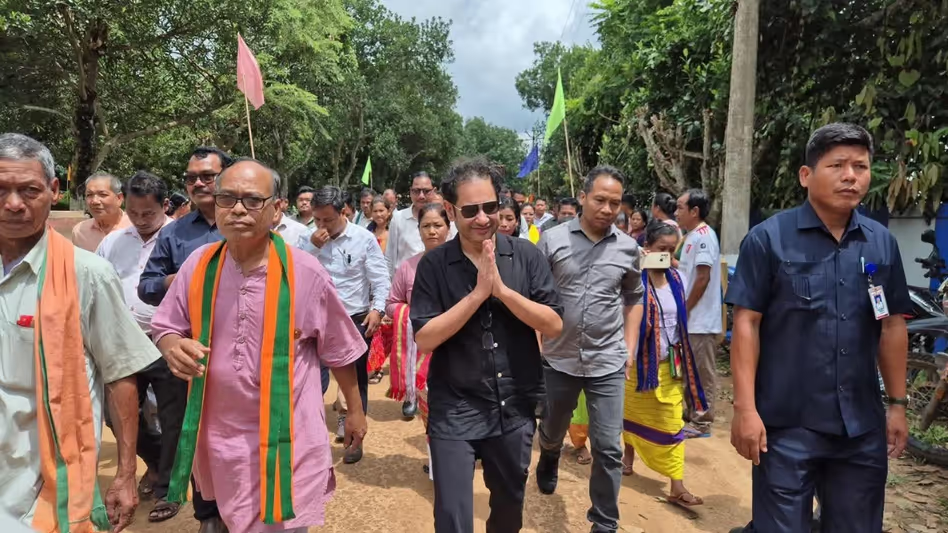
During a public gathering on September 15, Debbarma announced plans for the Tripura Tribal Areas Autonomous District Council (TTAADC) to establish cultural complex centers across the state. These centers will cater to all indigenous communities, including the Chakma, Mog, Hrangkhawal, and Ranglong peoples.
Debbarma pointed out a significant educational gap, noting that while Tripura students study the histories of states like Bengal and Bihar, they receive minimal instruction about their own region’s past. He emphasized the importance of teaching students about historical landmarks such as the Mata Tripura Sundari Temple and the contributions of Maharajas Amar Krishna, Birendra Kishore, and Bir Bikram Manikya.
The lack of emphasis on Tripura’s history has raised concerns about cultural preservation among indigenous communities in the northeastern state. Debbarma stressed the need for deliberate educational initiatives that reconnect young people with their ancestral heritage.
“Learning about Bengal’s history should not come at the cost of neglecting Tripura’s history,” Debbarma stated. “It is crucial for us to share our stories and ensure that our heritage is preserved for future generations.”
In his call for equal representation, Debbarma asserted that all citizens of India have the right to learn about their own history. He also urged tribal communities to set aside political differences and prioritize the unity of the Tiprasa people.
“The time has come for us to stand together as one community,” Debbarma said. “We must focus on preserving our heritage and ensuring that our voices are heard in the democratic framework of our country.”
