
In a landmark decision, the Supreme Court has ruled that a Governor cannot simply withhold assent to a Bill without returning it to the State Legislature. The Court’s opinion, delivered in a Presidential Reference, emphasized that such an action would be against constitutional principles and would undermine the federal structure of the country.
According to the Court, under Article 200 of the Constitution, the Governor is constitutionally permitted only three options when presented with a Bill: to assent, to reserve it for the President, or to withhold assent by returning the Bill to the Legislature with comments. The Court rejected the notion that withholding assent could be used as an independent power to prevent a Bill from becoming law.
The Court also highlighted the importance of maintaining a dialogic process between the Governor and the Legislature, stating that allowing Governors to indefinitely withhold Bills without returning them would derogate the powers of State legislatures. The Court emphasized that federalism is a basic structure of the Constitution and that any interpretation empowering the Governor to simply withhold a Bill would go against this principle.
The Court’s decision clarified that if the Governor chooses to withhold assent, the Bill must be returned to the Legislature for reconsideration. Once the Legislature passes the Bill again, the Governor cannot withhold assent from it. This process, the Court stated, is crucial for maintaining the cooperative spirit of Indian federalism.
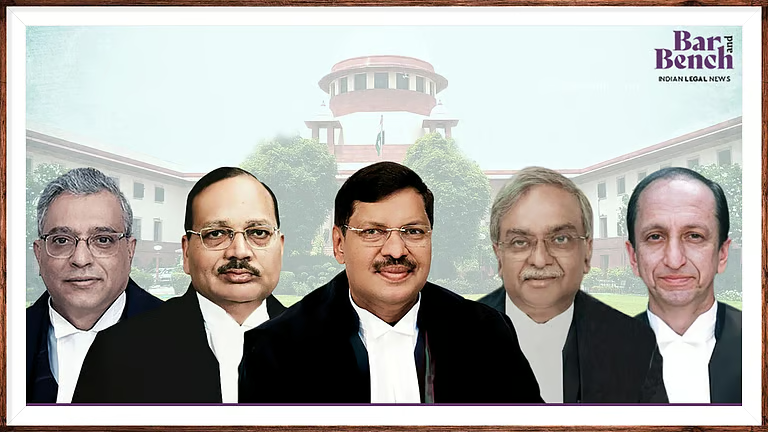
The Court’s ruling, delivered by a 5-judge bench, emphasized the importance of encouraging institutional comity and deliberation between constitutional institutions. The decision underscored the need to prioritize interpretations of the Constitution that promote dialogue and cooperation between the Governor and the Legislature.
In conclusion, the Supreme Court’s decision in the Presidential Reference reaffirmed the importance of upholding federal principles and maintaining a cooperative relationship between State legislatures and Governors. The ruling clarified the Governor’s options when presented with a Bill, ensuring that the constitutional ethos and structure of Indian federalism are preserved.
