
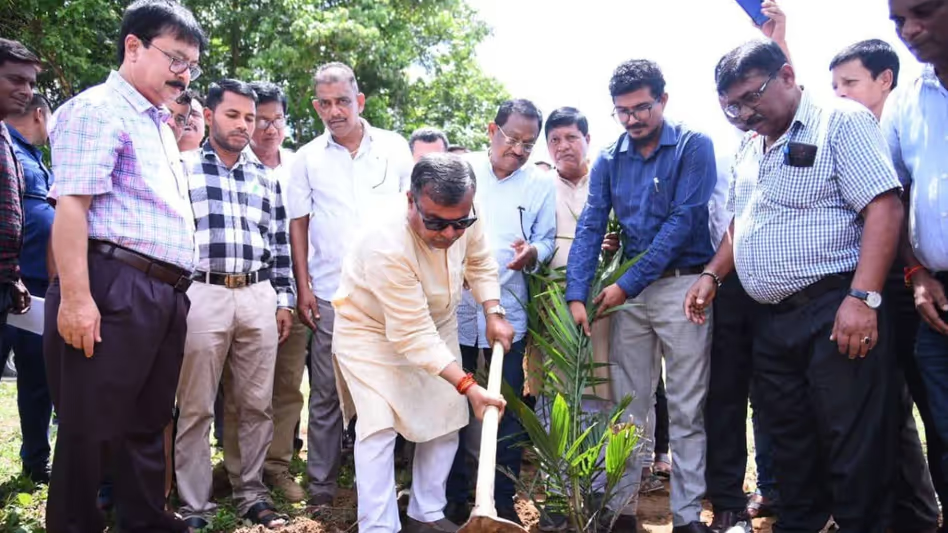
Tripura, a state in Northeast India, has made significant strides in its agricultural sector by cultivating nearly 4,000 hectares of oil palm. This achievement is part of the state’s goal to reach 7,000 hectares of oil palm cultivation by the financial year 2025-26, as announced by Agriculture and Farmers Welfare Minister Ratan Lal Nath.
During the launch of the Mega Oil Palm Plantation Drive at Taltala, Nath emphasized the need for India to reduce its heavy dependence on imported edible oils and strive for self-reliance in this sector. He highlighted Prime Minister Narendra Modi’s vision of a self-reliant India and pointed out that while the country is self-sufficient in various commodities, edible oil continues to be imported in large quantities.
Nath noted that Tripura, and the Northeast region as a whole, have favorable conditions for oil palm cultivation. The government is providing support to farmers, including assistance with land clearing and distribution of saplings. Unlike rubber cultivation, oil palm cultivation allows farmers to grow intercrops, providing additional income opportunities. Additionally, the rising price of palm oil ensures long-term market stability.
Palm oil is a versatile product used in cooking, industrial oils, cosmetics, pharmaceuticals, biofuels, and bio-lubricants. Under the National Mission on Edible Oils – Oil Palm (NMEO-OP), Tripura’s Horticulture and Soil Conservation department has signed agreements with companies like Godrej Agrovet Ltd. and Patanjali Foods Pvt. Ltd. for processing and procurement of palm oil.
Godrej Agrovet has been allocated districts like Unakoti, North, and Dhalai, while Patanjali will cover districts such as Khowai, West, Sepahijala, Gomati, and South. Godrej has already laid the foundation stone for a palm oil processing unit in Dhalai district and plans to establish an Oil Palm Research and Solutions Centre in collaboration with Malaysia’s SD Guthrie International.
Patanjali Foods Ltd. is also planning to set up a processing unit in Gurupada Bagan. The potential for oil palm cultivation in Tripura was initially identified in 2012, with an area of 7,000 hectares. A re-evaluation in 2020 expanded this potential area to over 1.46 lakh hectares using digital mapping.
Minister Nath reaffirmed the state’s commitment to achieving the 7,000-hectare target by the 2025-26 financial year, emphasizing the economic viability and strategic importance of oil palm cultivation for India’s edible oil security. This milestone marks a significant step towards agricultural self-sufficiency and economic growth in Tripura.
