
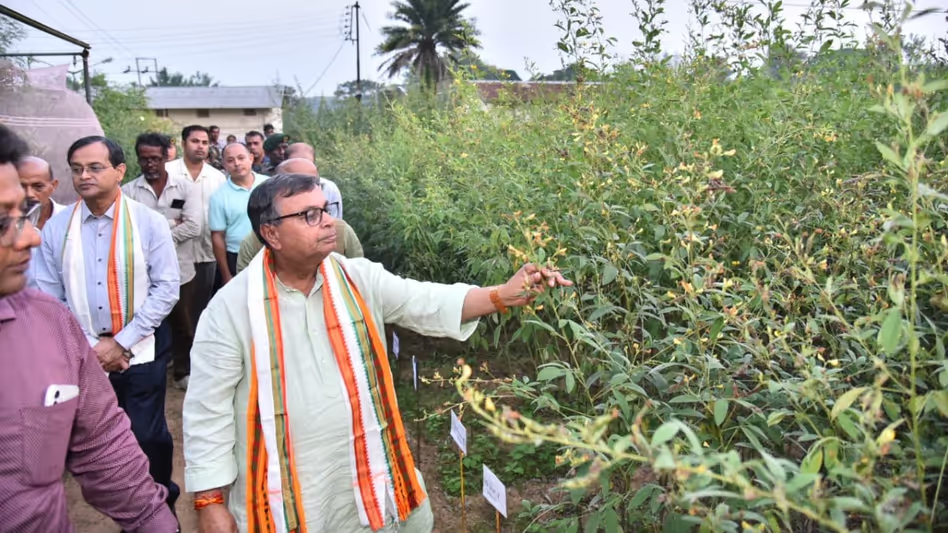
Scientists in Tripura have made a significant breakthrough in agriculture with the development of eight new high-yield Arhar Dal varieties. These varieties, specifically tailored to the soil and climate of Tripura, are expected to boost pulse production in the region and reduce the need for imports.
The research project, led by Assistant Professor Partha Das and supported by scientists Biman Dey, DP Awasthi, and B.C. Thangjam, began in 2009-10 with assistance from the Indian Council of Agricultural Research (ICAR) and the Tripura Government. After years of dedicated work, these new varieties are now ready to be distributed to farmers in the region.
Agriculture and Farmers’ Welfare Minister Ratan Lal Nath expressed optimism about the impact of these new varieties on Tripura’s agricultural landscape. He highlighted that the state’s average Arhar Dal yield per hectare has already increased from 705 kg to 823 kg in recent years. With the introduction of these high-yield varieties, the yield is expected to reach around 2000 kg per hectare, marking a significant increase in productivity.
Nath emphasized the importance of achieving self-sufficiency in pulse production, noting that while India has made progress in becoming self-reliant in other food commodities such as rice, milk, eggs, and fish, the country still relies on imports for pulses. He cited the National Mission on Pulses as a key initiative to address this issue and move towards self-sufficiency.
The minister also highlighted Tripura’s success in diversifying its agricultural sector, pointing to the growth of onion cultivation in the state. He noted that farmers are now demanding more onion seeds, a crop that was once considered impossible to grow in the region. This success story underscores the potential for further agricultural innovation and growth in Tripura.
Overall, the development of these new Arhar Dal varieties represents a significant step towards strengthening Tripura’s agricultural economy and reducing dependence on imports. With increased pulse production, farmers in the region are expected to see higher incomes, while also contributing to food security and self-sufficiency in the state.
