
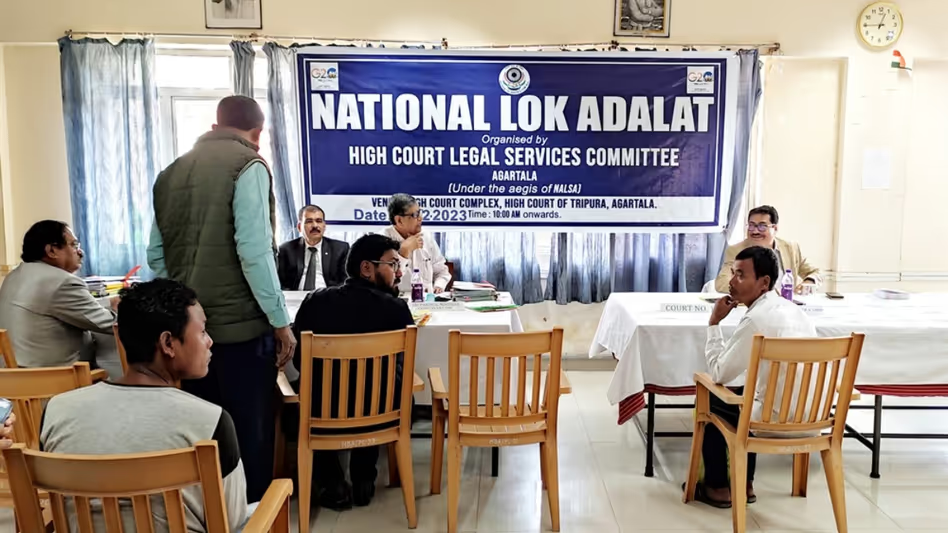
The third National Lok Adalat of 2025 is set to take place in Tripura on Saturday, September 13, with a staggering 31,789 cases on the docket to be heard by 39 benches. This event will be held at all district and sub-division court premises, as well as at the Tripura High Court.
Of the total number of cases, 24,113 are currently pending in various courts, while 6,776 are pre-litigation matters waiting to be resolved. The cases cover a wide range of disputes, including 203 cases related to compensation in motor accidents, 249 marital disputes, 5,594 cases involving bank loan repayments, and 1,182 concerning BSNL bill payments.
Furthermore, the National Lok Adalat will address 23,442 conciliatory criminal disputes under various acts, such as the MB Act, TP Act, TG Act, and Excise Act. Additionally, 68 cheque bounce cases under the NI Act, eight money suits, 35 civil cases (TSOMS), one case under the Forest Rights Act, and seven related to employment issues will also be taken up. The Tripura High Court will be hearing 24 cases before its bench.
Parties involved in these cases have already been served notices, and many have begun utilizing pre-conciliation or settlement options through the District Legal Services Authority and Sub-division Legal Services Authority since September 8. To ensure a smooth process, Odhikar Mitra volunteers are assisting parties who have received notices, helping them navigate the proceedings and reach a resolution.
Executive Chairman of the State Legal Services Authority, Justice Amarnath Gaur, has issued necessary instructions to ensure the success of the National Lok Adalat. Member-Secretary Jhuma Dutta Chowdhury, in a press release, has encouraged parties to take advantage of this opportunity to quickly and cost-effectively resolve their disputes.
The National Lok Adalat serves as an important platform for the efficient disposal of pending cases and the resolution of disputes through alternative means of justice. It provides a valuable opportunity for parties to come to an amicable settlement without the need for lengthy court proceedings, ultimately easing the burden on the legal system and promoting access to justice for all.
