
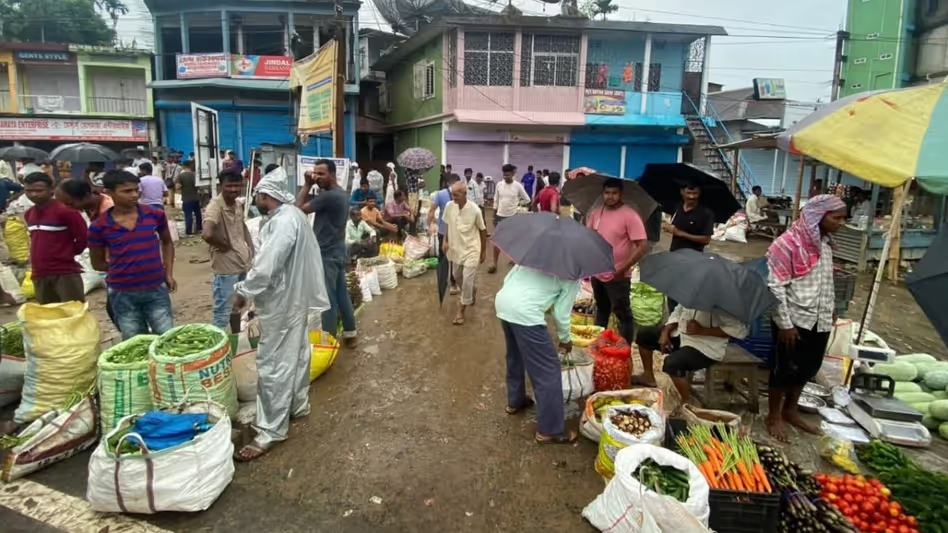
Tripura, a state in northeastern India, remained largely unaffected by a nationwide strike called by ten central trade unions. Normal life continued as usual across the state, with schools, colleges, banks, and offices operating without any major disruptions.
The Bharatiya Janata Party (BJP) State Secretary, Tapas Majumdar, held a press conference at the BJP state office where he asserted that the people of Tripura had rejected the bandh and the ideology behind it. He claimed that there were no reports of any untoward incidents in the state, and any attempts to disrupt public life were quickly brought under control.
Majumdar took a swipe at the Left-backed trade unions, stating that despite claims of a massive response to the strike in Tripura, the ground reality told a different story. He suggested that the people of Tripura had moved on from what he described as the outdated politics of the Left.
The BJP State Secretary attributed the rejection of the strike to the stability and development that Tripura had experienced under BJP rule. He highlighted the various schemes launched by Prime Minister Narendra Modi aimed at the welfare of the most marginalized sections of society.
Majumdar accused Leftist groups of using strikes as a means to derail the progress and development in Tripura, claiming that the people had chosen progress over protest. He emphasized that the culture of disruption no longer resonated with the people of Tripura.
Overall, the minimal impact of the nationwide strike in Tripura was seen as a sign that the state was moving towards a new era of development and progress, rejecting what was perceived as outdated politics.
