
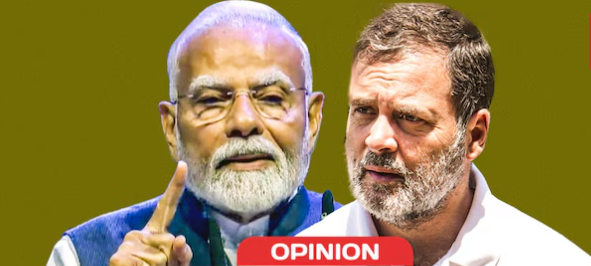
In the ever-polarized political discourse of India, few topics spark more confusion and controversy than the caste census. As murmurs grow around Prime Minister Narendra Modi’s government agreeing to a caste census, many are questioning whether the central government is adopting the same agenda long championed by opposition leaders like Rahul Gandhi. Is this a shift in policy or a strategic response to safeguard existing structures of social justice?
This article dives into the historical context, political motives, and core implications of the caste census debate. From Tamil Nadu’s 69% reservation legacy to Telangana’s recent census maneuvers, it’s a saga that highlights the tussle between empowerment and political manipulation.
The Legacy of Tamil Nadu’s 69% Reservation Model
The foundation of caste-based reservation politics as we know it today was laid back in 1969 with the A.N. Satyanathan Backward Classes Commission in Tamil Nadu. Based on its recommendations, 31% reservation was granted to backward classes, which eventually ballooned to 69% by 1980 — all this before the Supreme Court’s landmark 1992 Indira Sawhney judgment, which capped reservations at 50%.
But how did Tamil Nadu manage to bypass this cap?
Through the 76th Constitutional Amendment, Tamil Nadu’s Reservation Act was inserted into the Ninth Schedule of the Constitution, making it immune to judicial review. This immunity allowed not only Hindu backward castes but also Muslims (3.5%) to benefit from the reservation. This Tamil Nadu model became a blueprint for other states, especially those looking to extend similar privileges to religious minorities.
The Andhra Pradesh & Telangana Push for Muslim Reservation
In 2004, YSR Rajashekhar Reddy, then Chief Minister of Andhra Pradesh, attempted to provide 4% reservation to Muslims by categorizing them as backward classes. The Andhra Pradesh High Court struck down this move, citing its unconstitutional nature. A revised 5% ordinance met the same fate.
Fast forward to Telangana – under KCR’s leadership, commissions and committees like Sudhir and Ramu were formed with one key aim: allocate 12% reservation to Muslims. Though framed under the backward class quota, this move, too, was seen as a political ploy rather than a genuine empowerment initiative.
What makes it more controversial is that other religious minorities like Christians, Sikhs, Jains, and Parsis were not even considered in this classification process. The focus remained solely on Muslims, further raising suspicions of vote bank consolidation.
The 2024 Telangana Caste Census: Missing Numbers and Strange Stats
The Revanth Reddy government in Telangana conducted a caste census in 2024, but its full report remains hidden. Only a summary was presented in 2025 with several glaring anomalies:
- Backward class Hindus’ population dropped from 51% in 2014 to 46.25% in 2024. Why the sudden dip?
- Aadhaar data shows 3.95 crore population, yet the caste census lists only 3.70 crore. Where did 25 lakh people vanish?
- Out of 12.46% Muslims, 2.48% didn’t claim backward class status—meaning the rest, 10.08%, were automatically categorized as backward.
Clearly, a pattern emerges: through state-level caste surveys, Muslims are being incrementally shifted into the backward class bracket, laying the groundwork for religion-based reservation.
The Opposition’s Gameplan: Fracturing Hindu Society?
Critics argue that the primary goal of the opposition’s caste census campaigns is not empowerment, but division. By splitting Hindu castes and pushing for removal of the 50% reservation cap, parties aim to create space for religious-based quotas under the guise of social justice.
Statements from Rahul Gandhi and other leaders about removing the 50% cap aren’t just rhetoric — they signify a calculated attempt to redefine reservation politics, turning it into a vote bank strategy.
Modi Government’s Stand: Caste Census for Empowerment, Not Politics
Unlike opposition-led state efforts, the Modi government’s reported willingness to conduct a caste census comes with a very different approach:
- No intent to increase reservation caps
- No religious-based reclassification
- Use the data to identify economically and socially deprived castes
- Roll out targeted welfare schemes through social sector initiatives
This approach focuses on empowering deprived communities through developmental schemes rather than extending politically charged reservation benefits.
The Real Divide: Empowerment vs. Exploitation
At its core, the caste census debate is not about counting communities. It’s about how that data is used.
- Will it be used to manipulate reservation and secure vote banks?
- Or will it empower marginalized groups with meaningful, data-driven welfare?
While one side argues for religion-based reservation and breaking down Hindu unity, the other emphasizes empowerment without polarisation.
Conclusion: Know the Agenda Behind the Narrative
In a media landscape dominated by what some call “Pappu Media” and “Godi Media”, deep, unbiased analysis is rare. But the facts are clear:
- States are misusing caste census data to favor specific communities.
- The central government seeks to prevent misuse and instead focus on social upliftment.
- The opposition’s repeated call to remove the 50% reservation cap is a clear indicator of its long-term electoral strategy.
The caste census itself is not the issue. The intention behind it is. As India moves into a new socio-political era, it’s essential for citizens to remain vigilant and informed—not just by the headlines, but by the agendas shaping them.
