

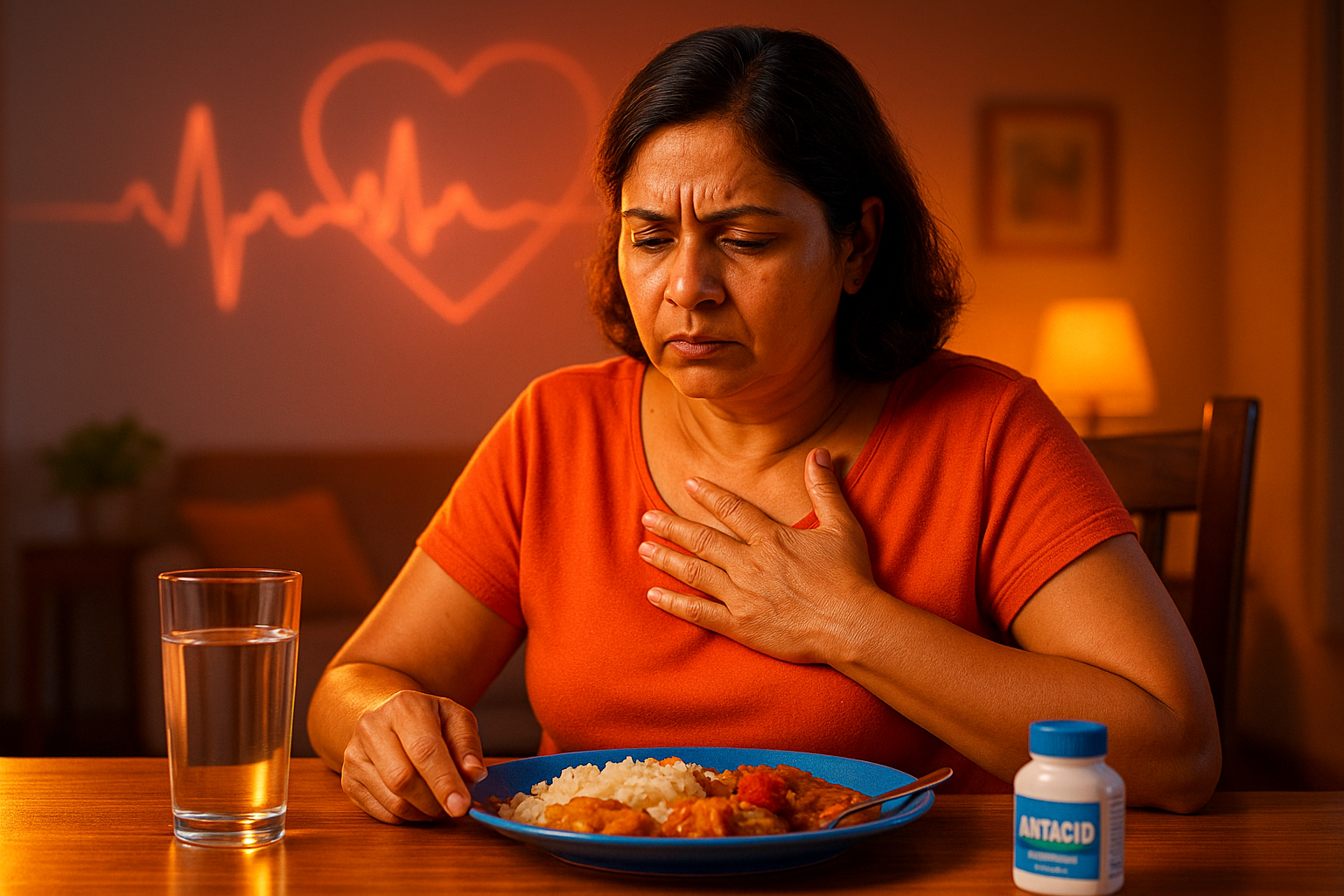
Why Doctors Say You Shouldn’t Ignore That “Indigestion” Feeling
A heavy meal. A little bloating. Maybe some burping after dinner. Most of us brush these moments off as “just gas.”
But what if they weren’t?
That question has been echoing in my mind ever since I came across a video by Dr. Naveen Bhamri, a senior cardiologist at Max Super Speciality Hospital, Delhi. He said something that hit home:
“Many people in India think bloating or chest heaviness is just gas. But sometimes, these are early signs of a heart attack—especially in people with high blood pressure, diabetes, or a long cardiac history.”
We all know the movie-version of a heart attack — someone clutching their chest, collapsing dramatically, and being rushed to the hospital.
But real life often looks very different.
The “Silent” Warning Signs We Miss
Dr. Bhamri explains that symptoms like bloating, chest heaviness, burping, or even mild back and shoulder discomfort can sometimes indicate reduced blood flow to the heart — what doctors call a silent heart attack.
It’s silent because the signs don’t scream danger.
In fact, a recent New York Times article on heart attacks echoed this global pattern. Cardiologists there explained how many heart attacks are misdiagnosed as digestive problems, especially among women and older adults.
These are the symptoms people most often ignore:
- Unusual fatigue that lingers even after rest
- Mild nausea or bloating that doesn’t resolve
- A dull ache in the jaw, shoulder, or upper back
- A vague sense of pressure in the chest, not necessarily pain
- Shortness of breath after small exertions
Because none of these feel dramatic, we delay. We wait. We assume it’s something minor.
Why It Happens More Often in India
In India, we’ve built a cultural shorthand for everything uncomfortable in the chest or stomach: “gas.”
We self-medicate with antacids, home remedies, or simply sleep it off.
Unfortunately, this habit costs time — and sometimes, lives.
Dr. Bhamri says,
“Heart symptoms and gastric discomfort can overlap. But persistent heaviness, pressure, or frequent bloating without a clear food trigger should not be ignored. In some cases, these are cardiac symptoms in disguise.”
He also points out that silent heart attacks are especially common in women, who often show less “typical” symptoms than men. Hormonal differences, long-standing high blood pressure, or diabetes can mask classic warning signs.
Gas or Heart? How to Tell the Difference
While only a doctor can confirm, here are a few clues that should make you cautious:
🩺 Timing:
If discomfort occurs during activity or stress, rather than only after eating, it’s more likely heart-related.
💬 Relief pattern:
Gas usually eases after burping or passing gas. Heart-related discomfort persists or returns quickly.
💓 Associated signs:
Dizziness, sweating, nausea, jaw or arm pain — these are red flags.
If you experience these, don’t self-diagnose. Call emergency services or visit the nearest hospital.
What Doctors Recommend
- Get your heart screened regularly.
Especially if you’re over 40, diabetic, hypertensive, or have a family history of heart disease. - Don’t normalize discomfort.
Any new or unexplained heaviness, gas-like feeling, or fatigue deserves evaluation. - Keep emergency numbers handy.
The first 60 minutes after a heart attack — what cardiologists call the “golden hour” — can make the difference between full recovery and lasting damage. - Balance food and lifestyle.
Heartburn after every meal isn’t just about food — it might reflect a deeper imbalance in your cardiovascular or metabolic health.
The Takeaway
Your body whispers before it screams.
What feels like gas today could be a heart warning tomorrow — and knowing that difference could save your life.
So the next time you feel that unexplained heaviness or “indigestion” that doesn’t quite fit the pattern, pause before reaching for antacids.
Instead, reach for a phone — and call your doctor.
Because sometimes, what we dismiss as ordinary discomfort is our heart quietly asking for attention.
Author’s Note:
This post is inspired by the insights of Dr. Naveen Bhamri (Max Super Speciality Hospital, Delhi) and research published by The New York Times on the subtle early signs of heart attack. It is meant for health awareness and not a substitute for medical advice.
#HeartHealth #Cardiology #PreventiveHealth #WomenHealth #SilentHeartAttack #Wellness #HealthcareAwareness
